
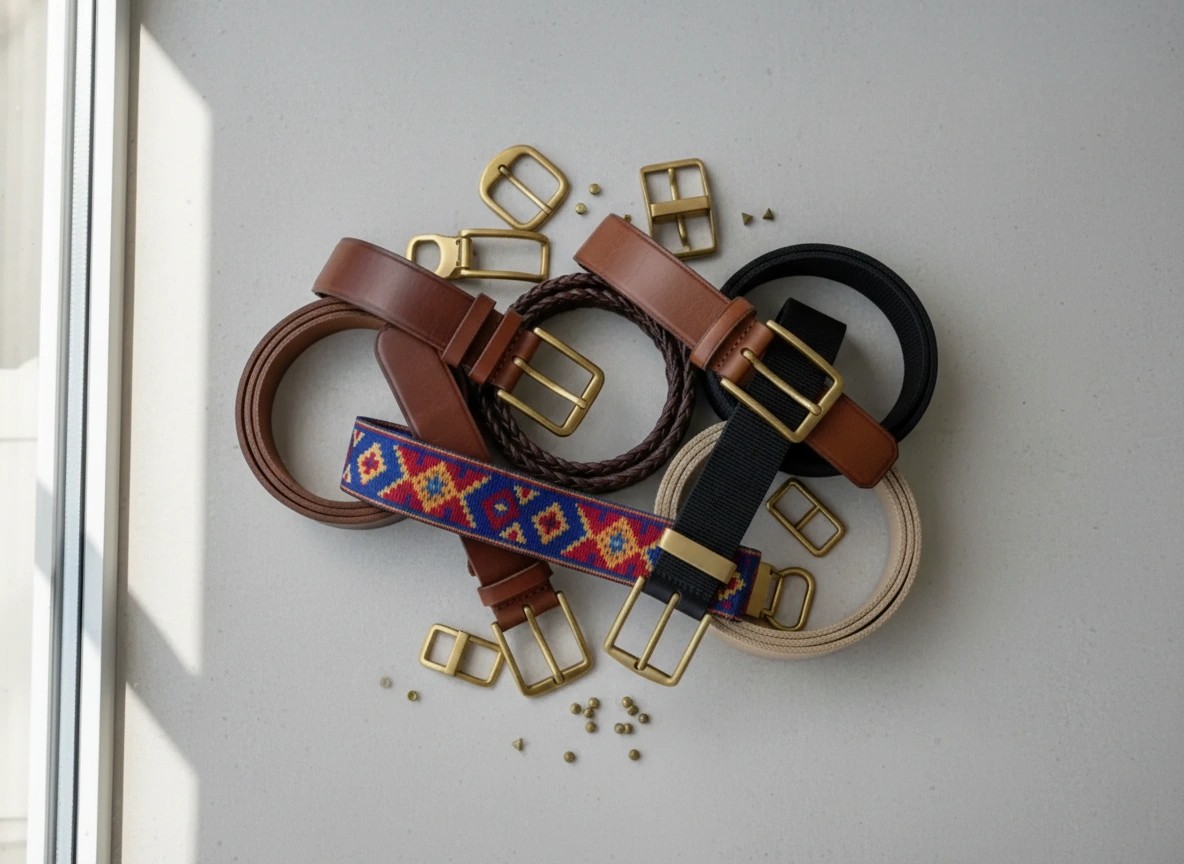
A belt does more than hold up your pants—it's a statement piece that ties your entire outfit together. Yet many people struggle with selecting the right belt, defaulting to the same worn piece regardless of occasion or outfit. Understanding the fundamentals of belt selection transforms this overlooked accessory into a versatile wardrobe asset.
This guide covers everything from material selection to sizing, helping you build a belt collection that serves both function and style.
Understanding Belt Materials
The material determines not only how your belt looks but also its durability, versatility, and appropriate occasions for wear.
Leather Belts
Leather remains the gold standard for belts, offering unmatched durability and the ability to develop character over time. Quality matters significantly—full-grain leather is the highest grade, retaining the hide's natural texture and developing a rich patina with age. Top-grain leather, while slightly less premium, still offers excellent quality at a more accessible price point.
Best for: Business settings, formal occasions, classic casual wear
Care: Condition every 3-6 months, store hanging or loosely rolled, avoid excessive moisture
Lifespan: With proper care, quality leather belts last decades
Embroidered Belts
Embroidered belts combine fabric backing (typically canvas or grosgrain) with decorative stitching, creating distinctive patterns ranging from subtle to bold. These belts bridge casual and semi-formal settings, adding personality without overwhelming an outfit.
Best for: Smart casual events, summer gatherings, preppy style ensembles
Care: Spot clean when needed, avoid machine washing, air dry if wet
Lifespan: 2-5 years with regular wear
Ribbon Belts
Made from woven grosgrain or similar ribbon material, these belts excel in warm weather and relaxed settings. They're lightweight, comfortable, and often feature whimsical or coastal-inspired patterns.
Best for: Summer events, casual outings, resort wear
Care: Hand wash in cold water, lay flat to dry
Lifespan: 1-3 years depending on wear frequency
Webbing Belts
Canvas or nylon webbing creates durable, affordable belts perfect for active lifestyles. Modern webbing belts have evolved beyond purely utilitarian designs to include refined options suitable for casual business settings.
Best for: Outdoor activities, travel, casual workplaces
Care: Machine washable in most cases, air dry
Lifespan: 3-7 years
Sizing Your Belt Correctly
Proper belt sizing ensures both comfort and aesthetic appeal. An incorrectly sized belt either won't fasten securely or hangs awkwardly with excess length.
The Simple Sizing Formula
Your belt size should be 2 inches larger than your pant waist size.
Example: If you wear size 32 pants, order a size 34 belt.
This formula assumes you'll fasten the belt at the middle hole, allowing adjustment in either direction as needed.
How to Measure
If you have a belt that fits well:
- Lay it flat on a surface
- Measure from the buckle prong (where it enters the leather) to the hole you typically use
- This measurement is your belt size
If measuring yourself:
- Put on the pants you'll wear with the belt
- Using a soft measuring tape, measure around your waist where you normally wear a belt
- Add 2 inches to this measurement
Width Matters
Belt width affects both aesthetics and formality. Getting this right prevents your belt from looking out of proportion with your outfit.
| Width | Best Use | Formality |
|---|---|---|
| 1 - 1.25 inches | Dress pants, tailored trousers, suits | Formal to Business |
| 1.5 inches | Most versatile - works with dress and casual pants | Business to Smart Casual |
| 1.75 - 2 inches | Jeans, chinos, casual pants with substantial belt loops | Casual |
The general rule: match belt width to the size of your pant belt loops. A belt should pass through loops without excessive space or forcing.
Matching Your Belt to Your Outfit
Coordinating your belt elevates your overall appearance, signaling attention to detail.
The Fundamental Rule: Match Your Shoes
In formal and business settings, your belt should match your shoes in both color and finish. Brown belt with brown shoes, black belt with black shoes. This creates visual cohesion and demonstrates style awareness.
Leather finish matching:
- Glossy shoes → Polished leather belt
- Matte shoes → Matte finish belt
- Textured shoes (brogues, etc.) → Textured or matte belt
Casual Settings: More Flexibility
With jeans, chinos, and casual pants, you have creative freedom. Ribbon belts with nautical motifs pair well with boat shoes. Embroidered belts add personality to plain outfits. Webbing belts work with sneakers or casual leather shoes.
The key is avoiding jarring contrasts—a bright, playful ribbon belt looks out of place with formal shoes, while a polished dress belt looks stiff with very casual sneakers.
Hardware Consideration
Belt hardware (buckle, D-rings) should generally match other metal accessories:
- Silver-toned hardware pairs with white metals (silver, platinum, white gold)
- Gold or brass hardware pairs with warm metals (gold, bronze)
- Watches are the primary reference point—match your belt hardware to your watch
Building Your Belt Wardrobe
You don't need dozens of belts, but having the right variety ensures you're prepared for any situation.
The Essential 5-Belt Wardrobe
- Black leather dress belt (1-1.25" width) - For suits and formal occasions
- Brown leather belt (1.5" width) - Versatile enough for business casual through smart casual
- Casual leather or webbing belt (1.5-1.75" width) - For jeans and everyday wear
- Embroidered or ribbon belt - For summer and preppy casual looks
- Canvas webbing belt - For active wear, outdoor activities, and very casual settings
These five belts cover virtually every situation most people encounter regularly.
Special Considerations
D-Ring Belts
D-ring belts thread through two D-shaped rings rather than using holes. They offer:
- Infinite adjustability within the belt length
- Clean, preppy aesthetic
- Often found on ribbon and webbing styles
However, they can loosen throughout the day with movement, requiring occasional retightening. They work best for casual settings where this minor inconvenience is acceptable.
Youth Belts
When buying belts for young people, prioritize:
- Adjustability: Kids grow quickly; size flexibility extends usable life
- Durability: Youth belts endure significant wear; quality construction matters
- Easy fastening: Simple buckles or D-rings work better than complex mechanisms
- Fun designs: Age-appropriate patterns keep kids engaged with wearing them
Caring for Your Belts
Proper maintenance extends belt life significantly and keeps them looking sharp.
General care tips:
- Rotate belts regularly rather than wearing the same one daily
- Store hanging if possible, or loosely rolled—never tightly coiled
- Keep away from excessive heat and moisture
- Address stains immediately with appropriate cleaning methods
Leather-specific care:
- Condition 2-4 times per year with quality leather conditioner
- If wet, let air dry naturally away from heat sources
- For scuffs, use matching color cream or polish
- Professional cleaning for serious damage or deep stains
Fabric belt care:
- Spot clean when possible rather than fully washing
- Air dry flat—never put in dryer
- Iron on low heat if needed, avoiding hardware
When to Replace
Even quality belts don't last forever. Replace when you notice:
- Leather cracking or peeling: This indicates the material has dried out beyond repair
- Holes becoming misshapen: Worn holes won't hold the buckle prong securely
- Hardware breaking or tarnishing badly: While some patina is desirable, severe corrosion looks neglected
- Fabric fraying extensively: Some edge wear is normal, but significant fraying looks unkempt
- Belt no longer fits: Significant weight changes warrant new sizing
Common Mistakes to Avoid
Wearing belts too tight: Your belt should feel comfortably snug, not constricting. If you leave visible indentations on your skin, loosen it.
Mismatching formality levels: A canvas webbing belt with dress pants looks sloppy. A highly polished dress belt with athletic wear looks stuffy.
Ignoring proportion: Very thin people look overwhelmed by wide belts. Larger builds need adequate width for visual balance.
Letting belts become the focus: Unless deliberately making a statement, belts should complement rather than dominate your outfit.
Buying cheap belts repeatedly: A quality belt at $60-80 that lasts ten years costs less than replacing a $20 belt every year, and always looks better.